January 8-10, 2027
 Greater Noida, India




The food and beverage sector has become a central pillar of India–Africa economic engagement. As Africa's population continues to grow rapidly and urban centres expand, the demand for affordable, dependable food supplies is increasing across the continent. With Africa's population expected to reach nearly 1.5 billion by 2030, food security remains a shared priority. In this context, India is well-positioned as a trusted partner, supplying essential and value-added food products that align closely with local consumption patterns and dietary preferences.
India's F&B exports to Africa have shown consistent growth, rising from US$179.9 million in 2019 to US$254.6 million, achieving a 5-year compound annual growth rate (CAGR) of 7.2%. This segment, encompassing processed foods, beverages, and value-added items, reflects diversification beyond staples, fueled by rising middle-class consumption and demand for convenient products.
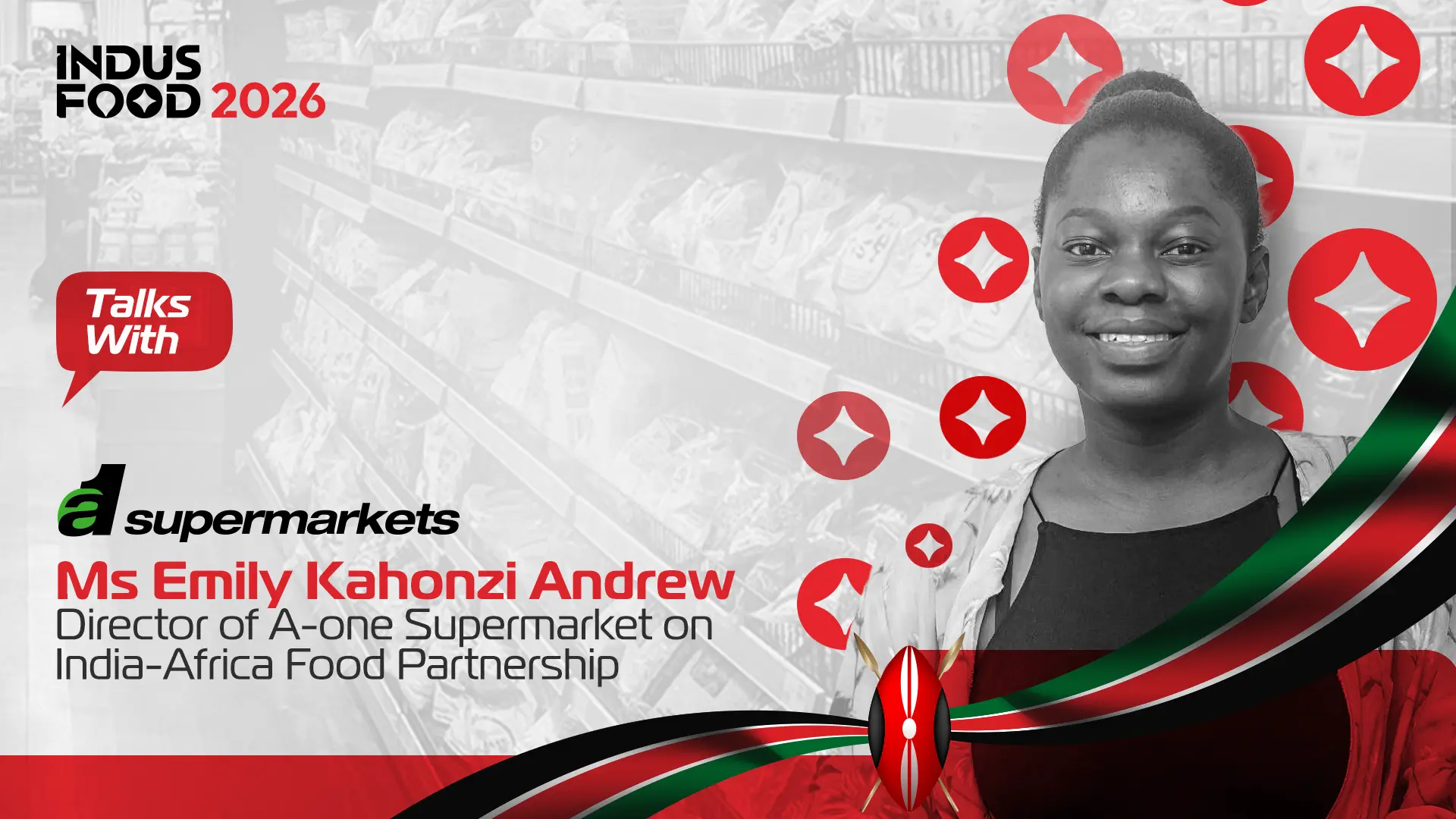
From an on-ground retail perspective, affordability and product suitability remain decisive factors in sourcing decisions. As Emily Kahonzi Andrew, Director, A-One Supermarket, notes:
"Affordability remains one of the key factors driving the growing presence of Indian food products across African retail markets. Products such as rice and spices are competitively priced and well-suited to the Kenyan market."
Dominating the basket are cereals, with exports reaching US$3.54 billion in 2024, including non-basmati rice, wheat, and maize supplied to countries like Benin, Senegal, Togo, Kenya, and Nigeria. Sugars and confectionery followed at US$1.24 billion, while meat and edible offal stood at US$769 million. These staples support Africa's food security programs, with Indian varieties prized for competitive pricing and quality.
She also added:
"Equally important is taste and quality. India produces high-quality rice, spices, and cereals that strongly appeal to consumers across the African continent. This combination has contributed significantly to the growing acceptance and appreciation of Indian food products."
Emerging trends include opportunities in processed foods, dairy, spices, and beverages, bolstered by partnerships in sustainable agriculture and technology transfer. As bilateral trade has crossed US$100 billion in FY 2024-25, the F&B sector is poised for further expansion through initiatives like concessional financing and joint ventures.
LATEST RELEASE